
Ecstatica 1994 Edition Differences and Version Comparison
Ecstatica 1994 debuted on MS-DOS as Andrew Spencer Studios' landmark survival horror adventure. Running via software-rendered ellipsoids without hardware acceleration, the original release set the foundation for subsequent Windows 95 and modern digital versions with distinct technical traits.
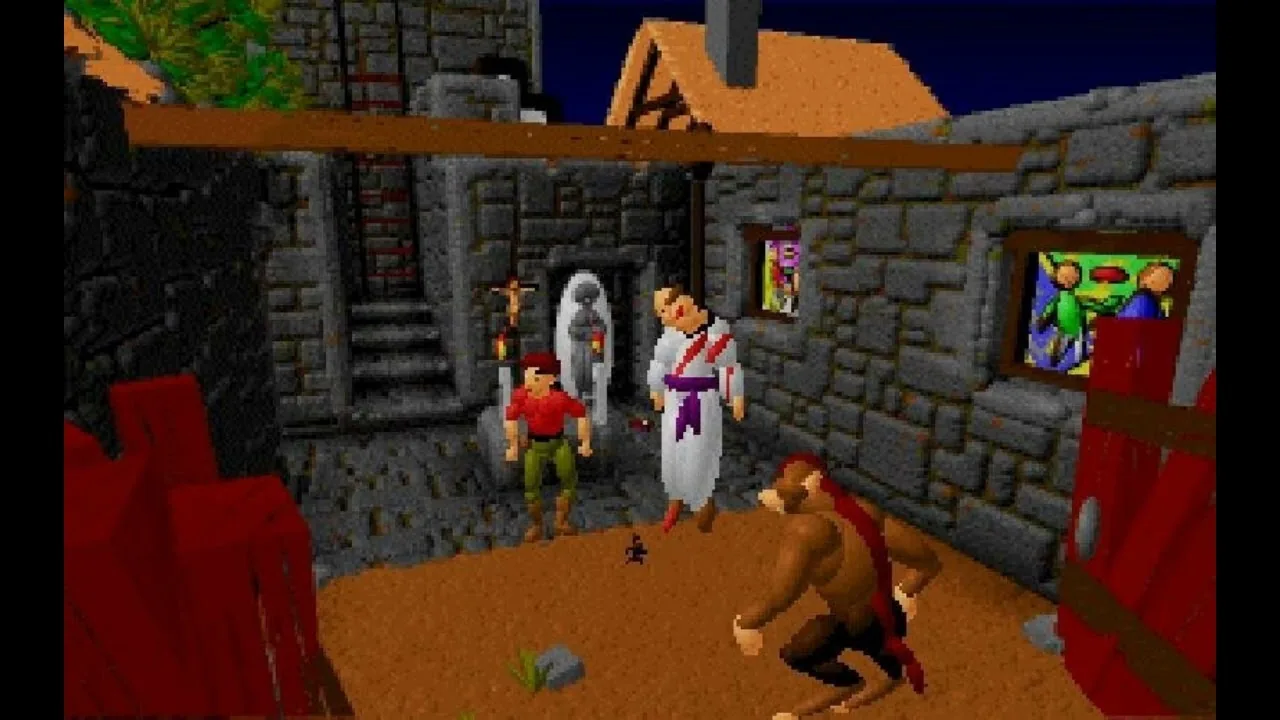
Ecstatica 1994 debuted on MS-DOS as Andrew Spencer Studios' landmark survival horror adventure. Running via software-rendered ellipsoids without hardware acceleration, the original release set the foundation for subsequent Windows 95 and modern digital versions with distinct technical traits.
Technical Foundation and Original DOS Architecture
Developed primarily by Andrew Spencer over several years before animator Alain Maindron joined the project, the original MS-DOS build shipped on both 3.5-inch floppy disks and CD-ROM under publisher Psygnosis. The custom software engine relied on curved ellipsoids rather than flat polygonal meshes to construct character models and environmental details like foliage. Because consumer 3D graphics cards did not exist in home computers in 1994, the CPU calculated all Gouraud shading and animation transforms in software across a palette of 256 colors.
The game installed over 100 megabytes of data to contemporary hard drives, combining more than 250 pre-rendered background scenes with fixed cinematic perspective angles. On high-end Intel 486 or early Pentium hardware, the MS-DOS executable capped out at an engine limit of 56 frames per second. The physical release included a combined poster and quick-reference sheet instead of a standard bound booklet, detailing installation commands alongside key bindings found in the physical manual.
Version Comparison: MS-DOS vs. Windows 95 vs. Modern Digital
The original release established the layout of the cursed village of Tirich, but subsequent releases altered display resolutions, audio pipelines, and input schemes. In 1997, a Windows 95 version appeared as a bonus disc inclusion alongside the sequel, introducing 640x400 SVGA rendering. The modern digital edition from publisher SNEG packages these revisions together with runtime switches for distinct graphics modes and peripheral options.
| Edition | Best Match Scenario | Trade-offs to Consider |
|---|---|---|
| MS-DOS (1994 Original) | Authentic 320x200 low-resolution aesthetic with period hardware | Requires manual sound configuration, setup for save routines, and lacks native controller inputs |
| Windows 95 (1997 Bonus Release) | Higher-clarity 640x400 SVGA rendering on vintage Windows setups | Removes the low-resolution visual blend that softens character seams |
| Modern Digital Release | Instant execution on Windows 10/11 with switchable graphics and cloud saves | Clean presentation removes the technical hurdles of vintage software emulation |
Control Layout and Gameplay Mechanics in the 1994 Release
The 1994 DOS version relied strictly on keyboard input centered on the numeric keypad. Movement functioned through standard tank directions, though the character had to come to a complete stop before rotating to face a new direction. Speed adjusted across twelve linear increments using function keys F1 through F12, letting players alternate between a slow sneak and an outright sprint.
Combat and object interaction split between hands rather than relying on a universal action button. Pressing 7 triggered the left hand for high overhead strikes, while 9 controlled horizontal swings from the right hand. Keys 1 and 3 collected or placed items using the corresponding hand. Numpad 5 triggered a duck maneuver that offered recovery frames during enemy attacks.
The title avoided on-screen heads-up displays entirely. Damage appeared contextually through character posture, such as limping or clutching injured limbs, with health recovering gradually while resting or retreating to calm screens. Selecting either a male traveler or a female protagonist offered identical movement statistics and handling across all village encounters.
Audio and Visual Differences Between Builds
The original 1994 DOS presentation operated at 320x200. The lower pixel density softened the visible intersections between individual spheres, creating a cohesive visual style for grotesque villagers, minotaurs, and the relentless werewolf. The DOS version also featured lower ceiling boundaries and noticeable leg jitter during rapid character turns.
The Windows 95 update resolved the leg jitter and opened up ceiling clearances, presenting the ellipsoid models at a crisp 640x400. While this increased visual clarity, it revealed the individual geometric balls comprising each limb more distinctly against the painted backgrounds. Audio configurations also shifted between versions. The DOS build relied heavily on ambient drone soundscapes and FM synthesizer routines, whereas the Windows edition incorporated full audio lines, distinct sound effect triggers, and General MIDI output. Modern editions preserve these differences by offering toggles for DOS ceilings, classic leg jitter, and alternate soundtrack recordings.
Next step
Demo Overview
Find out what content is included in the Ecstatica demo, how to adjust display modes, and which control options are supported on modern hardware.